The Real Cost Of Freedom

Janis Joplin many times sang the mournful lyrics “Freedom’s just another word for nothin’ left to lose” back in the ‘60s, and well she knew the cost of freedom. It was in the price of what she gave up…not what anyone took. She never really had freedom, despite her fame and convoluted fortune, and that’s what she was saying. I know this because my business partner at the time was her best friend, and she was with her until the end.

The Cost Of Freedom Blog is about how we’ve all lost our freedom by our collective choice of attitude. We might be free to drive around and do a lot of things freely, but few people seem to know how much we’ve given up to be “free,” and what that’s costing them…and us as a society. Our prisons and jails are full of people who know the pain of that lost freedom, but the fact is few of them had it to begin with. The same is true to a less dramatic but no less impactful way about many of the rest of us who live in prisons of a different kind.

But it’s not just that, by any means. It’s much more positive than that. It’s about how we take steps to get that freedom back…again by our choice of attitude, and by our willingness to tell the truth and be accountable for our thoughts, words and actions––how we learn to respect one another, and our individual cultures, gender and personal circumstances.

The photo above depicts freedom to me, both in an energetic, visual sense, and in a more personal sense. I twice flew a light plane over that bridge, once when it was enshrouded in thick fog and only a few skyscrapers (literally) poked through the layers of Walt Disney clouds, and again later on in her famous “golden glow” at sunset. Many years later, I stood under her with a group of my closest friends celebrating a breakthrough moment in my life. I had just addressed a luncheon of the members of the San Francisco Yacht Club on the subject of the meaning and true value of personal freedom, as one who served 2 1/2 years in federal prison, and whose federal prosecutor later wrote the Foreword to a book I authored. Behind me in the distance as I spoke to this esteemed body of accomplished people…was Alcatraz.

This Blog Site is about Personal Freedom, and I’d like to focus on those who have done time on either side of the fences and walls. It is my desire to explore ways and exchange ideas and principles of understanding how we create a better, more effective and truly correctional system of criminal justice. If we can make even a 15% positive change, the impact on society overall will be huge. Imagine what it could be like if we could make that 50%. We can. We just have to think…and act…differently. I know, “easier said than done”…but we have to start somewhere. Why not start with ourselves?

Don Kirchner ReturnToHonor.org
Showing posts with label return to honor. Show all posts

Friday, June 4, 2010

Cruel and Unusual Punishment for Illinois Prisoners


E-mail
Health Topics Soy Alert!
Friday, 01 May 2009 14:24
When Rod Blagojevich was elected governor of Illinois in 2002, he immediately made a change in the prison diets. Beginning in January 2003, inmates began receiving a diet largely based on processed soy protein, with very little meat. In most meals, small amounts of meat or meat by-products are mixed with 60-70 percent soy protein; fake soy cheese has replaced real cheese; and soy flour or soy protein is now added to most of the baked goods.
The governor's justification for replacing nutritious meat and cheese with toxic soy protein was financial-to lower the enormous costs of running the Illinois Department of Corrections. However, the likely reason is payback for campaign contributions from Archer Daniels Midland, the main supplier of soy products to the Illinois prisons.

Suffering of Inmates

Early in 2007, the Weston A. Price Foundation began hearing from inmates who were suffering from a myriad of serious health problems due to the large amounts of soy in the diet. These prisoners had found us through the Soy Alert! section of our website. Complaints include chronic and painful constipation alternating with debilitating diarrhea, vomiting after eating, sharp pains in the digestive tract, especially after consuming soy, passing out, heart palpitations, rashes, acne, insomnia, panic attacks, insomnia, depression and symptoms of hypothyroidism, such as low body temperature (feeling cold all the time), brain fog, fatigue, weight gain, frequent infections and enlarged thyroid gland. Since soy contains anti-fertility compounds, many young prisoners may be unable to father children after their release.
The suffering of these men is intense and medical care is palliative at best. Many have had sections of their digestive tract removed, but all requests for a soy-free diet are denied. The men are told, "If you don't like the food, don't eat it." That means that unless they can afford to purchase commissary food, they must eat the soy food or starve.

Lawsuit

The Weston A. Price Foundation has hired an attorney to represent several inmates incarcerated in the Illinois Department of Corrections system. The Foundation's attorney has entered his appearance on behalf of three inmates, has had contacts with several other inmates, has served several subpoenas upon the wardens of several facilities for documents and other information, and has informed the Court that additional inmates will soon be named in an amended complaint.
The lead case is captioned Harris et al. v. Brown, et al., Case No. 3:07-cv-03225, and is currently pending before the Honorable Harold Baker in the United States District Court for the Central District of Illinois. The Foundation has until May 30th to file its amended complaint and the Defendants have 30 days after the complaint is filed to file their respective answers. The suit seeks an injunction putting a halt to the use of a soy-laden diet in the prison system.

How You Can Help


click to read entire story by source:  Weston A. Price Foundation


Monday, May 3, 2010

A True American Hero

Col. Robert Howard, A True American Hero
 
In my second book, Return To Honor, I write about such topics as “Courage,” “Truth,” “Attitude,” and other core values that I draw upon to illustrate how one can liberate him or herself from the traps of moral weakness, illusion and “victim” mentalities that keep us stuck on the never-ending treadmills of life. In the first chapter, I refer to Audie Murphy, until recently considered the “most decorated hero” in U.S. military history.
 
Today I learned of the death of another American hero, Col. Robert Howard, the only person in history to be nominated for the Medal Of Honor three times, for three separate acts of the ultimate level of heroism. (You can only receive one per lifetime.) Bob Howard also earned eight Purple Hearts (for injuries sustained in battle),  and numerous other medals such as the Silver Star, the Bronze Star and so forth. If my count of what was listed is correct, he surpassed the total of Audie Murphie’s awards, which is almost inconceivable. To earn even a Silver Star alone takes an act of courage “above and beyond” the call of duty, and the Medal Of Honor itself is almost impossible to earn. Over 60% of those who did received theirs posthumously.
 
What compels me to write about Col. Howard at this point is to point out that nothing is impossible. One does not have to be a battlefield hero to be a “hero.” As the beloved “Doctor of Love,” Leo Buscaglia once wrote, “For most of us there will be no tickertape parade…no awards banquets or medals handed out for the heroic deeds we’ve done. But if we only knew the ripple effects that resulted from even the simplest acts of love and kindness we’ve done in our lives, we’d all be ‘heroes’.”
 
That may seem not so significant, but I can tell you for certain, and a good number of movies have portrayed it, and books have depicted it, that in fact a simple act of kindness can indeed change someone’s life. Consider the classic film, “It’s A Wonderful Life,” starring Jimmy Stewart, or the recent hit “Blindside,” starring Sandra Bullock, both of which were based on true stories. There are many more, and many that we’ll never know about…but lives have changed and have been saved over acts of kindness that may not take the courage and sacrifice of people like Col. Howard and Audie Murphy, but the long-term benefits can actually be just as great.
 
“If we only knew,” as Leo wrote, “the ripple effect” that our kindness and our courage to act kindly toward others has created. If we had the chance to step back and see the good that we've done, it would most certainly prove to have been worth all the difficulties, the challenges and heartaches that we have endured.
 
Never think that your life hasn’t counted for much. If you’ve done even the smallest thing to help someone else, to love someone else, or to do anything kind for someone that enabled them to change something troubling to them, then you have been a “hero.”
 
Don Kirchner
Sedona, Arizona


Friday, March 5, 2010

Standing Room Only at Job Fair for Felons

It's time we started retraining those who are incarcerated and stop making it a financial bonanza for private contractors to house prisoners.


Copyright @ 1998-2010
All Rights Reserved


Sunday, February 7, 2010

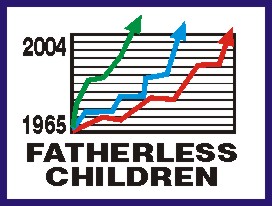
A Nation of Fatherless Children


In a recent broadcast by National Public Radio on the plight of men locked up before trial and held for lack of sufficient funds to make bail, the commentator said that there are now more children impacted by their fathers being incarcerated than there are from divorce. I haven’t researched that rather shocking statistic, but as one who had an opportunity to experience such a thing on a first-hand basis for two and a half years over two decades ago, I have no doubt that it’s true.

According to www.divorcerate.org, present divorce rates in America run from nearly 50% for first marriages to as high as 73% for third marriages, so if NPR’s commentator is even close to being accurate, that’s a lot of children with no father present in their lives. Add them together, and it’s clear that America is a nation of “fatherless” children. Given this nation’s justice system’s obsessiveness with locking people up for nonviolent and drug related crimes, it’s no wonder that we can’t build prisons fast enough, or that we continue to have such exorbitant crime rates. We’ve got a burgeoning population of children with no place to go and no father to help them figure things out.

Before you think to yourself, “Well, what kind of fathers would a bunch of inmates and criminals make, anyway?” consider that the majority…not the minority…of inmates in America’s prisons today are not the heinous, scarred and tattooed gladiators one sees in the movies and television programs. A full 70% of those incarcerated are for nonviolent, first and second offenses…usually drug-related crimes. Even so, I’ve watched first-hand even the “gladiators” in visiting rooms, bouncing small children on their knees, and being warm, kind and loving with them…and returning to their cell blocks fighting back the tears everyone knows are flooding their eyes.

The damage, sociologically, to this country in locking men (and women) up for interminable periods for crimes of a relatively harmless nature is far-reaching, and much more destructive in the long run than all the crimes put together that create such a rip in the fabric of our society. We’re breeding generation after generation of young criminals, at a rate that far exceeds that of radical Islamic terrorists who cultivate and train their young children to become suicide bombers…and we’re oblivious to how and why crime is so rampant in our streets.

I’m not suggesting that we do not punish law-breakers, by any means. I’m saying that we must have legislative reform in this critically important aspect of our development. We cannot continue to justify such extremes in retaliating against people who break the law, and expect that just because we remove them from our streets that we are going to be safer. There is a delusion in so thinking, because the more we do that, the more we ignore the children who are left to fend for themselves in an increasingly hostile world facing economic and political upheaval.

If we don’t take steps NOW to change the laws, and redirect those many individuals who can be trained to function more responsibly while performing community services instead of wasting away behind bars and Plexiglas cellblocks, we will soon find ourselves like I did once…facing the wrong end of a loaded gun while my car and pockets, and bank account were emptied. Thank God that at least one of those young perpetrators wasn’t quite yet so strung out on Meth that the chamber of that gun he held wasn’t emptied on me.


Don Kirchner
Sedona, Arizona


Thursday, January 28, 2010

What Is Honor, Really?


A close friend of mine and I were in a discussion today about relative terms…words and phrases like love, truth, respect…and honor…words we all tend to take for granted assuming that everyone knows what we’re talking about when we use them. I was referring to men in prison who do their time “honorably” should be acknowledged somehow…maybe with a certificate of achievement or something to give them some kind of recognition for having done the right thing.

“What does that mean?” she retorted. “You think we should give them an award for doing time for something they screwed up? How can that be ‘honorable’?”

I was a bit taken aback because she works with me and she well knows what I mean by ‘honor.’ Or so I thought. It’s about standing tall, telling the truth, being in integrity and so forth. Even men in prison know the core truth of what that means. But then again, maybe not. I’ve had audiences of inmates stand and cheer when I talk about them doing their time ‘honorably.’ They seem to know what I mean, but maybe that's just slogans and feel-good words. But my own teammate and manager didn’t seem to get what I thought was a given. Then I realized that she was making a damn good point: We don’t always speak the same language. Honor to an inmate can, in fact, be very different from honor on the battlefield, or the corporate workplace. It’s a relative term, no matter how much we might assume everyone knows what it is.

To men in prison, it’s more than staying out of trouble while doing their time. It’s about going the extra distance to make sure you’re not even suspect by people on either side of the walls of doing something devious or not right. You don’t sidestep issues or lie or manipulate others. You reach out, even if it’s without someone knowing, and you help them in some way. It’s caring about others first and yourself second…while still keeping to yourself and not interfering with their lives. It’s being courageous without bullying or resorting to needless violence…even if courage involves walking…not running…away from trouble. It’s about not buying into the “unwritten rules” of behavior that keep men on both sides playing mind games and intimidating each other. It’s about doing kind things and doing any job well, even when no one’s watching.

It’s no different on the outside, really…just less intense and far less threatening or intimidating. Prison (and jail) are places to learn fast…albeit a bit painfully at times…how to do such things without compromising one’s character or integrity. If one can accomplish that while locked up, that’s a huge jump in maturity and self-respect…which leads instantly to outward respect. To me, that’s what ‘honor’ is about…respect. That doesn’t mean coddling or cowtowing to others, or sucking up to them. It means simply that you acknowledge each person as a human being…not an “inmate” or any other label we use all too frequently for people we don’t know or understand or run with.

Anyone who can get through any length of sentence in prison or jail without incident, hostility or negative behavior certainly deserves some credit. It’s damn hard to get through such an experience without being confronted at some point. Anyone who does, has accomplished something significant, and yes…they deserve a certificate. From some of the places I’ve seen and heard about, just getting through it alive and intact and sane is cause for a medal…and receiving some sort of credit for doing their time well should be actively monitored by prison and jail staff, and make note of when it happens, how often and by whom…and that person will come out a better man or woman because someone took the time to notice in the first place, then made an effort to acknowledge it.

Yes…give them some recognition for getting through the minefields and the cesspools of the twisted world of our present correctional system…while under constant threat of ‘enemy fire.’ Give them a medal, a stripe or a certificate or something to say they did something honorable. That will be even better than a job reference, once we do it often enough and well enough to get it started. Once it shows up in changed attitudes by released as well as present inmates, and by correctional officials themselves, and others on the outside who are exposed to continued ‘honorable’ living, it will spread like wildfire. 

What an example we could set by seeing someone come out of the pits of hell, clean themselves up and get back into the workforce…or, better yet, into schools and colleges once they qualify. After all, that's what made this country great. 

Don Kirchner
January 27, 2010


Wednesday, January 13, 2010

Let's Break the Chains


Time for Release?  Now What?
A Job?  Low Pay.  No Benefits.  Forget It.
Create Your Own Online Job and Break the Chains


There is a good reason that the prison population is increasing dramatically. You are cash money to the man.  They make a lot more with you behind bars than they ever will with you outside their control. So, when you do manage to get released, you are offered low paying jobs with little advancement, no benefits, and every opportunity to feel so low that in a moment of insanity you actually think you are better off inside.  Check this out:


Despite the efforts of such groups as The Society for Return to Honor, a nonprofit organization in Sedona, Arizona, that aims toward facilitating the re-integration of qualified, pre-selected former convicted felons into their communities -- it is a tough road.  The economy is flat and what jobs there are available are usually at or near minimum wage without benefits.  Nobody can live or raise a family on such "opportunities".


With over 1,600,000 men, women and adolescents in jails, prisons and detention centers in the United States, and an astonishing 70-80% of all inmates released from incarceration returning to jail or prison within the first year after their release, it is clear that communities and individuals are not taking the extra meaningful steps toward understanding the true nature of criminal behavior, and addressing its causes rather than reacting to its effects. 


Most determined and highly-motivated former offenders fight a nearly impossible battle for acceptance and respectability in returning to their communities.  The simplest things most people take for granted are often formidable obstacles for the newly-released prisoner; a place to sleep, food to eat, clothes to wear, a job, transportation, and even deposits required for a place to live. 


Often lacking the self-confidence, required social skills and personal resources, released prisoners face nearly impossible odds in their attempts at re-entry into society.  WE CAN HELP.  We have the compassion and willingness to understand the problems facing offenders of all ages. 


WE CAN HELP


Saturday, January 2, 2010

Declaration of the Four Sacred Things


On this first day of the New Year and new decade, it seems to me only right and appropriate to post a declaration I once read in a book entitled The Fifth Sacred Thing, by a gifted writer named Starhawk in 1993. This book and the story contained inside was a powerful writing on the importance of paying attention to how we do what we do in the world, and how that impacts and affects others. This declaration sums up in a few short paragraphs the essence of what it is to be a responsible and accountable human on the planet…more so now in these times than ever before.

The following is my gift to you to carry in your mind and heart for the coming times.

Don Kirchner

New Year's Day 2010


“The earth is a living, conscious being. In company with cultures of many different times and places, we name these things as sacred: air, fire, water and earth.
Whether we see them as the breath, energy, blood, and body of Mother Earth, or as the blessed gifts of a Divine Creator, or as symbols of the interconnected systems that sustain life, we know that nothing can live without them.
To call these things sacred is to say that they have a value beyond their usefulness for human ends, that they themselves become the standard by which our acts, our economics, our laws, and our purposes must be judged. No one has the right to appropriate them or profit from them at the expense of others. Any government that fails to protect them forfeits its legitimacy.
All people, all living things, are part of the earth life, and so are sacred. No one of us stands higher or lower than any other. Only justice can assure balance; only ecological balance can sustain freedom. Only in freedom can that fifth sacred thing we call spirit flourish in its full diversity.
To honor the sacred is to create conditions in which nourishment, sustenance, habitat, knowledge, freedom and beauty can thrive. To honor the sacred is to make love possible.
To this we dedicate our curiosity, our will, our courage, our silences, and our voices. To this we dedicate our lives.”


Wednesday, December 30, 2009

Setting Higher Standards…


We live in a time where everything seems upside down and backwards. Having just elected a U.S. President by the largest margin of popularity in recent history with slogans of positive change and “Yes, we can,” we naively assumed that significant change would be forthcoming any day now.


A lot of things have changed, all right, but not many of them appear to have been all that positive…at least not for middle-class Americans. Not being particularly political in nature, I was nonetheless hopeful that something positive would come from the millions contributed to, raised and spent on both campaigns, and I have suffered through like everyone else the billions spent on bailouts, executive bonuses and comprehensive healthcare reform that doesn’t seem to amount to anything truly beneficial for the majority of us. What sort of “positive change” has taken place so far, and how long do we wait for the pieces to fit together so that the simplest real changes might come? Is it so hard, really?


Despite some ridiculously simple solutions that have been offered by mathematicians and economists who seem to have a lot of common sense, still things keep getting more complicated and elusive, and we appear to have yet another “runaway” government out of touch with reality and with us…their true employers. Once again we find ourselves on yet another roller coaster ride, over which it feels like we have no control.


But we do have control. We just don’t realize it because we don’t understand the sheer simplicity of how control works. It’s not about opinion polls, elections or chains of command. It’s about setting higher standards for ourselves that can give us each a firm foundation in our own lives first, then by example and demonstration greater and greater impact and influence on those we deal with every day. Gradually, those standards can become immutable and non-negotiable, such that it becomes clear who does and who does not embrace those standards.


The standards I’m talking about are not philosophical, esoteric or theological. They are the core principles and values that made this country, and some past civilizations, great. Among them are moral values such as telling the truth, courage, honesty, respecting others and valuing one’s own self. There are others, but if we can get even a few of those down, we can change our lives, and influence others to change theirs. Ultimately, that will change the world, and bring sensibility and sanity back.


I know that seems a bit altruistic and far-fetched, but it’s true. We just lost touch with the common and simple values we all know in our hearts are right and true, no matter what philosophy or religion one embraces. We may not be able to change radical terrorists, but we can gradually change the people we deal with every day, and in turn they can impact more of their contacts until eventually people are treating one another respectfully. It can happen…and yes, we can…make a difference in the world, one person at a time.


Don Kirchner
Sedona, AZ


COPYRIGHT @2009


Tuesday, October 6, 2009

Netherlands to Close Prisons: Not Enough Inmates


For years prohibitionists, including our own Drug Enforcement Administration, have claimed — falsely — that the tolerant marijuana policies of the Netherlands have made that nation a nest of crime and drug abuse. They may have trouble wrapping their little brains around this:

The Dutch government is getting ready to close eight prisons because they don’t have enough criminals to fill them. Officials attribute the shortage of prisoners to a declining crime rate.

Just for fun, let’s compare the Netherlands to California. With a population of 16.6 million, the Dutch prison population is about 12,000. With its population of 36.7 million, California should have a bit more than double the Dutch prison population. California’s actual prison population is 171,000.

So, whose drug policies are keeping the streets safer?

SOURCE:
MPP BLOG


Monday, September 14, 2009

Prison Nation

Some people are concerned about a network of internment camps that appears to being built at great expense around the nation.

What's more shocking is that right now the US has more people behind bars than any country on earth including Russia and China.

In fact, one of of every four human beings on earth who is imprisoned is in a US facility. Look it up.

That's a horror show taking place right now and it barely merits comment.

Amazingly, a vast network of legalized slave labor based on imprisoning blacks for petty and made up crimes existed in broad daylight in the South up until 1945, the reality of which is only just now coming to light.


Sunday, August 9, 2009

Fearstorms


These are either the “best of times” or the “worst of times,” as Charles Dickens wrote in his Tale of Two Cities, depending upon how you choose to look at them…”choose” being the operative word. It’s all a matter of choice, really, even if you’re broke and facing a foreclosure, in how you deal with that dilemma. What will ultimately come of it depends entirely on how you choose to handle it.

If you have a bad attitude about what’s going on these days, you’re going to have some pretty bad times ahead…even if the economy should happen to turn around and real estate values go back up again. Your health and sense of well-being also will likely be affected negatively, and the worse you feel about any of that, the worse it will get. If, on the other hand, you look for something good and decent in everything that happens…even the “bad” things…they will improve. Pollyanna was right…and now is the ideal opportunity to put her philosophy to the test. I have, and I can assure you that I’m well-qualified by now to tell you that it’s true.

A man I know fairly well runs a series of very large entrepreneurial training forums, and at one point he portrays in a very convincing way the nature of what he refers to as “fearstorms.” He uses film clips from “Jurassic Park” and a couple other very convincing movies to demonstrate how even the most seemingly menacing situations are just mental and emotional anticipation of things not always real. We make them real by fearing and resisting them. That’s not to say that what’s going on the world right now isn’t real, but rather it emphasizes the importance of taking charge of our lives and finding better, more effective ways of dealing with both real and imagined threats to our well-being. WE get to choose how we feel about it…and our history books, movies, books and many personal stories of overcoming adversity in the world confirm over and over that we can not only get through difficult times, we can grow stronger in the process.

Find ways to feel better, love more, laugh a bit and trust yourself to make it through any challenge, and to do so with courage, honesty and integrity, and no matter what the difficulty may be that you face, you can and will get through it. Hate it, twist around it, deny it or manipulate people to help you get around it, and times will get harder for you. Accept it, deal with it, be honest about it and find ways to be kind and loving with those around you, and the best of times will surely be upon you…no matter what dark clouds may be out there.

They’re only fearstorms.

Don Kirchner

http://ReturnToHonor


Monday, July 20, 2009

Through Others' Eyes...


I recently saw a trailer for a new movie, “The Visitor.” I haven’t seen the movie yet, but I’m certainly going to because the tag line hooked me: You can live your whole life and never know who you are…until you’ve seen the world through others' eyes. The trailer went on to show a man bored with his life who, by chance, is exposed to the lives of people less fortunate than him. In a few short minutes, I was swept up into his new outlook as he began to reach out to others and use his professional skills and insights to make life a little better and more meaningful for them.

Have you looked at the world through others' eyes? I have…and now I can hardly do anything but that. I was born into a fairly respectable family…a career Army officer and mother who raised us as morally as anyone in the Midwest, where we were all from. But he bailed out early in my life for reasons known only to his soul, and I was left to make crucial decisions way too early for that busy little mind of mine to handle. As a result, what should have been a pretty decent future became for a while a series of jail and prison cells. I was forced to discover that life was very different for a whole lot of people outside of my protected military upbringing. Those people had lived through outrageous challenges that most people can only imagine through graphic portrayals of prison life in movies, books and television programs.

What I experienced, once I got over the initial fears and posturing that goes on between ethnic groups and different cultures, was a common human thread…men who were struggling with the same fears, angers and remorse…albeit often hidden…that I was. Once I began to use my education and communication skills to help them better understand their behavior and how to change their attitudes and their outlook, I discovered a whole world of men who could overcome anything…and many who actually wanted to. They just didn’t know how…nor had anyone on the outside willing to help them make the lasting changes needed. More often than you might believe, I had hardened criminals with tattoos and scars all over their bodies in tears as they told me stories of their childhoods and how much they wanted to be respected and cared about by society.

Whether you’re dealing with prisoners or former prisoners, or people who are merely prisoners of their own minds and negative attitudes, the willingness on your part to see the world through their eyes can and will make the biggest difference in bringing about deep and lasting changes in the way we live our lives and build toward a more meaningful future. If you will pause from time to time and be willing to see the world through others' eyes, your world will change for the better…guaranteed.

Don Kirchner
http://ReturnToHonor.org


Sunday, July 19, 2009

Next Calling?


A front page feature article in today’s Sunday paper described the rising interest on the part of aging Americans to join the Peace Corps and “make a difference” in the world. God knows that the starving kids in Bosnia, Bulgaria and people living less fortunately in all parts of the world need and well deserve all the help they can get. At the same time, however, so do millions of our own people right here in America. Believe it or not, we have many “third-world” living conditions within our own borders. Some of them are Native American reservations, which to me is an ironic twist of fate for those whose ancestors were here first, and many more who are in the streets of many of our biggest cities. Of those, a huge percentage are people who have either done time in prisons and jails of America, or are destined to if their attitudes and lifestyles don’t change soon. Then there are the families and the children of those who are or have been incarcerated. When one considers that 2.6 million people are locked up across America, and they impact at least 5 to 10 people on the outside, that number alone is staggering to consider. It exceeds the entire populations of some of those third-world countries who "need our help".

So, what about us? What about our people? What about the children growing up in neighborhoods where the wallpaper on whatever rooms they have to sleep in are constantly illuminated with the red and blue flashing lights of the police cars outside, and whose playgrounds are streets filled with drug addicts and dealers, prostitutes and police SWAT teams and helicopters circling overhead? How do they fend for themselves, and what hope do they have for a better way to live? Who’s making a difference in their lives?

In the early 1980’s, Jerome Miller became the Director of the Massachusetts Department of Corrections. In an unprecedented move, Mr. Miller closed all but the most essential juvenile detention centers in his state, and put the money saved into pro-active programs to mentor and provide simple caring to juveniles in the form of college students paid to “hang out” with juveniles as “big brothers” and “big sisters.” The rate of juvenile crime in Massachusetts during those years dropped by over 50%.

As someone who has dedicated much of the past decade or so to “making a difference” right here at home, I commend anyone wishing to do anything that makes a difference in the lives of others, and I urge anyone wishing to do so to look into juvenile diversion programs and anything having to do with “re-entry” or “aftercare” of former felons. It’s not a bad or scary thing, because every former offender (and they are “former” until they re-offend), is really just a terrified little kid in a scarred, tattooed grown-up body who made the wrong but often only choices available to them early in life.

You want to make a difference in the world? Start right here at home…and right now. All it takes is a modicum of compassion, a willingness to understand, and a little courage to overcome preconceived notions and judgments, and make an effort to learn more about it. Just that much will reduce crime in this country by as much as 10%, I can promise you. As a noted correctional specialist once wrote to me, “For altruists who want to save lives, that’s a lot of lives. To economists who want to save money, that’s a lot of money.” Google “Prisoner Re-entry” or “Prisoner Aftercare Programs” in your state for more information than you can likely absorb in the two years required to serve in the Peace Corps, or check out the large number of affiliates and resources appearing on this blog site, and you may just find your “next calling” in life.


Don Kirchner
www.ReturnToHonor.org


Friday, July 17, 2009

Taking the Ride


Taking the Ride


It’s hard to know what’s right and what’s wrong these days. So much is coming out in the news and on the Internet that seems so convincing that either all is lost or all is saved, depending on how you choose to view things. Either way, Ph.D.’s and stalwart economists and political analysts are obviously so confused and conflicted that anyone onboard this “ship” of ours has got to be terrified as to who’s at the helm and what sort of charts are they using to navigate us through the storms ahead.

Having been through some storms of my own that on a personal level make what lies ahead of us not so scary to me, I’m here to say that it’s all part of the journey we’ve all known secretly or otherwise was bound to come. “Life runs in cycles,” a very wise old mentor of mine used to say. “If we would just step back a bit and look at the patterns, we could predict the future pretty accurately.” He was 94 when he passed away with his Daytimer still in hand, and he’d run businesses as big as any that are now in various stages of bankruptcy and collapse. He’d seen it all, through World Wars, recessions and the “Great Depression,” and he said with a smile, “It’s all just an exercise in consciousness…and sometimes it’s better just to ride the horse the direction it’s running.”

Yes, there’s trouble ahead…and some people are going to get hit hard. But it doesn’t have to be all that hard. What my old friend was saying, in essence, was that once you’re moving, stay with it and enjoy the ride as best you can. How you get to the other end is a matter of your choice of attitude. Fight it and resist it, and you only make it harder on yourself. Fight it and resist it to the extreme, and you’ll most likely not ever see what’s on the other end.


At several points in my own ride through life, I’ve been at what appeared to me to be a dead end, but I always managed to take a deep breath and plunge ahead, only to find sensibility and mysteries unveiled. Recently, at one of the worst times in my life, I chose to keep a truly positive (as opposed to faking it) attitude, and the most apparently unlikely person to have any resources with which to help me showed up…and became one of my biggest supporters and newest “best friend.” That’s actually happened to varying degrees many times along the way, and I can tell you unequivocally that it’s worth every trial and every sorrow.


Show up for others in your life, no matter what, and don’t give in to the doomsayers and “analysts,” and your ride will prove memorable…even enjoyable––regardless of what it might look like right now. If enough of us do that, those storms will blow over with a whole lot less damage and destruction, and like the end of the movie, “Titantic,” we’ll all raise our goblets in toast to the ride of our lives.

Don Kirchner
ReturnToHonor.org


Tuesday, July 14, 2009

Making a Difference


A few days ago, I buried a friend of mine. She wasn’t a long-time friend…in fact, I hardly knew her at all. She bounced off the windshield of the truck in front of me, and in a blur of feathers and wings she fell under my car as I passed over her. I hate it when that happens…even more so when it’s me that’s the cause of such suffering…but I had places to go and people to meet, so I winced a bit and brushed it off as simply another contribution to the food chain. But as I drove along another mile or two, it bothered me enough that I knew it would still be bothering me later if I didn’t do something about it. So, I whipped a U-turn at the top of the next hill and went back to find her still in the highway and not yet road-kill.

I got out of the car and took a look at her. She was still blinking her little eyes…still showing some sign of life…so I picked her up and held her for a bit, hoping that perhaps she was just knocked silly but would recover and fly away as they sometimes do. She laid there in my hand calmly looking back up at me for a minute or so, then suddenly flapped her wings furiously and fell to the ground. When I picked her up, her eyes were closed and she was gone.


I was on my way back from a long road trip, and that incident…harmless and insignificant as it may seem, had a lasting impact on me. It was just a bird…one of millions out there doing their thing, so why should this one have any impact on me? It was a bit of feather and wing clinging to life in a palm of human flesh and bone, clinging to life on another level, but nonetheless significant in the grand scheme of things.


As I traveled along in the days afterward, I thought about the human friends and family members I’ve lost over the years, and wondered what had been meaningful about them…what had they accomplished in their lives? We’ve just “lost” Michael Jackson, once revered then scorned and vilified, and now loved and revered again, and along with him another icon of my generation, Farrah Fawcett, born the same year as me, and someone I had a huge crush on for most of my adult life.


What did they leave behind of lasting value besides memories and estates for others to squabble over? What did they do to make life better for others? Such thoughts caused me to go deep into myself and wonder what have I done to make life better for anyone else? What legacy will I leave behind that will matter to others?


What about you? Who are you? What are you doing with your life that really makes any difference to others? Are you just getting by, or are you pursuing something in your life that has a positive impact on others? Are you just making your way from cradle to grave as safely as possible, or are you clearing a path for others behind you?


It doesn’t take a Michael Jackson or a Farrah Fawcett to make a real difference in the world. As Margaret Meade wrote so powerfully, it only takes a small group of (passionate) people committed to making a difference to change the world for the better. So, whether you impact millions, like Michael or Farrah, or one at a time, do it with all the passion and caring you can muster. If enough of us impact just a few others in our lives, we can and we will see miracles and wonders in our lifetimes yet. It doesn’t take an icon…and in fact it rarely works that way at all. It only takes a few of us, dedicated to leaving behind something for others to be inspired by, and a clearer path for them to find their own way. Can you do that much? If you can, you will be just as important––if not more so––than any “icon” ever has been.


Don Kirchner

www.ReturnToHonor.org


Sunday, July 12, 2009

The Best of Times...or the Worst of Times

The Solution

In the months and years after the jetliners crashed into the World Trade Center in 2001, the American public was introduced to greed and corruption on an unprecedented scale that brought about the collapse of Enron first, then one Fortune 500 company after another after another until business failures on a large scale became almost passé. In recent months, we have seen the collapse and bankruptcies of companies that made those failures seem paltry by comparison. Along with that has come a litany of sex scandals among our top political and religious leaders that has most of America and the rest of the world wondering where the hell does it stop, and how much worse can it get?

Personally, I don’t know where it stops on the grander scale, and things may well get worse before they get better. But I do believe that they will get better eventually, and that it has taken such massive breakdown on all levels and resulting hardship to get our individual attention on what’s most important. WE are what’s most important. By that I mean that we as individuals matter in that overall grand scheme of things, and the only way that we can hope to make a difference in creating a truly “kinder, gentler nation” and safe world to live in is to give back to one another instead of taking blindly whatever we can from a nation that is essentially bankrupt.

I don’t know if we’re on the “brink of collapse,” as so many people are saying, but I know that I can at least stop contributing to the breakdown by paying more attention to how I go about my daily life, and by how willing I am to reach back and help others. If you don’t think that will make a difference, consider how all those people were able to keep their charades going for so long. We allowed that to happen…all 300 million-plus of us at every level of our “get-ahead-at-any-cost” culture. Those planes flew into those towers not just because a bunch of Islamic Jihadists had a grudge against us. It happened because we stopped caring about others on a massive scale…and we allowed our political, military and corporate leaders to take whatever they wanted from other countries and from us. Collectively, we contributed to the process in some way or other by allowing it to happen.

I’m not going to take issue with the powers-that-be, or side with radical elements who want to bring the government down, but I damn sure will start paying more attention to what goes on in my life. The only thing I can do of any real substance, even if it’s tiny by comparison with what a general or a Senator or CEO of any of the remaining Fortune 500 companies can do, is to reach back and help someone else get through what is going on now. Just that act alone makes one person at a time feel better and more valued, and begins a process of rebuilding confidence and caring that, one at a time, builds to the point where more people are paying more attention to what goes on in their lives and who we put in office and whose products we buy.

We got ourselves so caught up in making a living and getting ahead or just surviving that no one paid attention to some trends and patterns that now in hindsight seem pretty obvious even to un-trained eyes. Those people got away with the things they did because we let them, and we ignorantly allowed ourselves to believe that we couldn’t do anything about it. We just went along with it, believing that it didn’t affect us.

I know that it doesn’t seem that any individual can make much of a difference, but we have to begin somewhere…which can and should be with ourselves. Each of us can make a difference by the examples that we set and how we impact others with our thoughts, words and actions. Consider the movie, “Pay It Forward,” and how you felt after watching it. Of course it was “just a movie,” but it had a profound impact on just about everyone who watched it because it showed how powerful one simple idea, properly implemented, had the potential of changing masses of people at a compounding rate.

You can make a difference. You need to make your voice and your intentions heard among those over whom you have any influence or control, and you have to commit to making a difference, no matter how small it may seem to you. Mentoring, caring, guiding and re-directing others on any and all levels can and will restore balance and sensibility in an insane world. At no time in history has social order and disorder been in such an amplified state. But we have the Internet, satellite TV, computers and many things that will vastly accelerate the process, which can make these the best of times in the face of the worst of times.

Don Kirchner
ReturnToHonor.org


Tuesday, June 9, 2009

Incarceration: Changing Our Thinking


Incarceration: Changing Our Thinking


Incarceration is a term with which most Americans are well familiar by now. Enough movies, books and television and news programs have us all well informed by now about all the dark, evil and brutal aspects of being locked up. True, it’s scary and sinister stuff. It’s the darker side of the human experience, and for most people it is evil and even brutal. But it’s our stuff, meaning that collectively it belongs to us. We, as a society, created it and we sustain it by what we believe about it and how we allow others to run it, just like everything else in the political and economic worlds.

In order to do anything about it that makes any difference, we need to recognize it for what it is, and how it functions with our collective acquiescence and indifference…and our ignoring what goes on inside the walls and fences. That includes what goes on in the minds of the people who manage and administer jails and prisons, many (if not most) of whom do so with a sense of vengeance and coldness that only enflames the problems and reinforces behavior patterns on the part of “criminals” that typically make them worse.

I am not a cynic, nor do I have anything against “the system,” such as it is. In fact, I work with that system, in that I counsel and teach both inmates and correctional officers how to recognize behavior patterns that are destructive and counterproductive, and to change those behavior patterns for the better. It’s amazing how small a change in thinking toward others will positively affect their behavior no matter how “brutal” or vengeful they might be.

How do I know this? I was one of them. I was a federal prisoner for 2 1/2 years, which very nearly became 25 years, with no chance of parole. I survived the experience in the face of brutish resistance and hostility toward me because I looked like everything most inmates and criminals have learned to dislike and distrust. But as I made consistent efforts to help them with simple things like reading and writing, their behavior changed for the better, not only toward me but toward everyone else––including correctional officers. What seemed destined to be a 25-year sentence became far less, primarily because of the good that was evidenced as a result of my work inside. Nearly everyone's attitudes toward one another began to change, and with that came near-miraculous developments that enabled me to not only still be alive, but thriving outside the walls as a useful, contributing member of society.

In order to change anything that has such a huge collective emotional charge such as the criminal justice system, we have to get outside of our own personal issues and pre-conceived notions about crime and criminals, and be willing to change our thinking…if only a little bit at a time. Just being willing to understand is a major step forward. One needn’t agree with or condone criminal or negative behavior, but only be willing to see behind the masks and the negative images we see in the movies and on television. If enough of us do that (and thank God that there is a groundswell of people on both sides now doing exactly that), we can change the way “incarceration” works, and make it work far more effectively.

Don Kirchner
June 9, 2009
www.ReturnToHonor.org


Thursday, February 12, 2009

Judges Take Cash to Jail Juveniles


The Associated Press
updated 6:56 p.m. MT, Wed., Feb. 11, 2009 WILKES-BARRE, Pa. - For years, the juvenile court system in Wilkes-Barre operated like a conveyor belt: Youngsters were brought before judges without a lawyer, given hearings that lasted only a minute or two, and then sent off to juvenile prison for months for minor offenses. The explanation, prosecutors say, was corruption on the bench.

In one of the most shocking cases of courtroom graft on record, two Pennsylvania judges have been charged with taking millions of dollars in kickbacks to send teenagers to two privately run youth detention centers. “I’ve never encountered, and I don’t think that we will in our lifetimes, a case where literally thousands of kids’ lives were just tossed aside in order for a couple of judges to make some money,” said Marsha Levick, an attorney with the Philadelphia-based Juvenile Law Center, which is representing hundreds of youths sentenced in Wilkes-Barre.

Prosecutors say Luzerne County Judges Mark Ciavarella and Michael Conahan took $2.6 million in payoffs to put juvenile offenders in lockups run by PA Child Care LLC and a sister company, Western PA Child Care LLC. The judges were charged on Jan. 26 and removed from the bench by the Pennsylvania Supreme Court shortly afterward.
No company officials have been charged, but the investigation is still going on.

The high court, meanwhile, is looking into whether hundreds or even thousands of sentences should be overturned and the juveniles’ records expunged. Among the offenders were teenagers who were locked up for months for stealing loose change from cars, writing a prank note and possessing drug paraphernalia. Many had never been in trouble before. Some were imprisoned even after probation officers recommended against it. Many appeared without lawyers, despite the U.S. Supreme Court’s landmark 1967 ruling that children have a constitutional right to counsel.

CLICK TO READ FULL ARTICLE


Tuesday, February 10, 2009

California Ordered to Reduce Prison Population

58,000 Non-Violent Prisoners Ordered Released

(CNN) -- Federal judges tentatively ruled on Monday that California must reduce the number of inmates in its overcrowded prison system by up to 40 percent to stop a constitutional violation of prisoners' rights. California must cut the number of inmates in its prison system by up to 40 percent, judges have ruled. "Overcrowding is the primary cause of the unconstitutional conditions that have been found to exist in the California prisons," the court concluded.

California state officials, including Gov. Arnold Schwarzenegger, immediately promised to appeal the case to the U.S. Supreme Court, if necessary.

"The governor and I strongly disagree with this ruling," said Matthew Cate, California's corrections and rehabilitation secretary. Implementing the court's ruling would result in up to 58,000 prisoners being released, Cate said, describing it as a threat to public safety. He disputed the court's contention that the prisons are unsafe the way they are now.

But in 2006, Schwarzenegger declared a state of emergency because of "severe overcrowding" in California's prisons, saying it had caused "substantial risk to the health and safety of the men and women who work inside these prisons and the inmates housed in them." In court documents, the judges said the state's prison system was at about 200 percent of capacity.

The ruling is the result of two class-action lawsuits on behalf of California prisoners who said medical and mental health care in the state's prisons are so inadequate that they violate the federal constitution's Eighth Amendment ban against cruel and unusual punishment.

The judges said their ruling is tentative so that the parties involved can plan accordingly, essentially giving them an opportunity to work things out themselves before an official ruling is rendered. The court suggests a two- to three-year window for reducing the number of prisoners in the system.

Those who would be released would be very low risk, according to Don Specter, director of the Prison Law Office, a group that provides free legal services to California prisoners. He said the ruling would affect those in jail for three or four months because of parole violations, those getting early release dates, and those who might qualify for early release for taking part in rehabilitation programs.

CLICK TO READ FULL STORY